Kirtan Rabbi Blog

Category Archives: Press

Velveteen Rabbi Blog

Rabbis Without Borders, kirtan, wow

By  Rabbi Rachel Barenblat

December 17, 2012

Velveteen Rabbit image


Velveteen Rabbit image 2


Rabbi Brad Hirschfield  led a fantastic afternoon session exploring and recontextualizing the statistics Lisa had placed before us. I want to blog about that, at some point. I have a lot of thoughts and ideas bouncing around my head now. I’m thinking a lot about the notion that the rising number of “nones” — those who aren’t affiliated with any religious tradition; who check the “none” box on surveys — is not an ending but a beginning. An opening for a new chapter which we may, if we are awake and aware, be blessed to help co-author.

But the thing I want to write about tonight was our evening program, which was Hebrew kirtan with the Kirtan Rabbi.  Kirtan  is devotional chanting. In its original context, it’s a kind of  bhakti yoga  — a devotional practice of chanting divine names in order to open up the heart. Reb Drew led us in an evening of chanting, interspersed with narrative. He told us, over the course of the evening, how he came to explore this form of sacred practice and to integrate it with Judaism.

One of the chants which moved me was a variation on the shema. It features a variety of names for God: not only Adonai and Yah but also  hesed, gevurah, tiferet  — the classical kabbalistic sefirot. I smiled as those names unfolded. I thought, ah, I see what he’s doing there, that’s very lovely. I enjoyed the chanting, and then when the chant was done I enjoyed the experience of singing the full shema once as our chatimah.

But the chant which really got me was his chant which works with the kaddish. There are several parts to the melody, and we chanted each one in turn.  L’eilah min kol birchata u-shirata  — beyond all blessings and songs.  Y’hei shmei rabbah m’vorach  — may the Great Name be blessed. One of the melodic lines is borrowed from the way the kaddish is sung on Friday nights, so I grinned the first time we sang it — a familiar melody and familiar words, shifted and changed by their new context. I was surprised by how much joy and energy we brought to singing that line.

This is hard to describe; I’m not doing it justice. We reached a place where we were singing his kaddish kirtan in harmony — the women singing one melodic line and set of words, the men singing another — and all of a sudden my heart cracked open and I burst into tears. Quietly, mind you; I don’t think most of the room noticed. I covered my face with my hands and took a few deep breaths and then I was able to sing again, though softly. By the time we finished the kaddish my face was wet and all I could think was that this must be what it’s like to be part of the choirs of angels singing holy holy holy back and forth all day.

I’ve been blessed to have this kind of peak experience many times over my years in Jewish Renewal, but I wasn’t expecting to have it tonight. (I’ve heard Reb Zalman speak several times about the challenge of “domesticating” the peak experience — taking the peak experiences we may be blessed to have on retreat, and bringing them home with us, bringing that energy home to enliven our daily prayer lives.) I didn’t see it coming, and there it was: a surprise from God, a moment of intense connection where my heart opened wide and God poured in.

Maybe it was because I was chanting kirtan in such an intimate setting —  this RWB cohort  is a scant 18 people, so it was an intimate room, all of us seated close together and close to the music. Maybe because everyone in the room knew what the words meant (while I think most kirtan afficionadoes would say that the experience of chanting is meaningful even if the words are opaque — come to think of it, that’s one of the arguments I’ve used for davening in Hebrew even when one isn’t fluent, too — I do think that something is added when one knows what one is praying.)

One way or another, it was wonderful experience. I’m grateful to Reb Drew and his wonderful ensemble (especially  Shoshanna Jedwab, whose drumming — when I encounter it —  always enlivens my prayer). To my RWB cohort for willingness to enter into this admittedly non-traditional experience (which we’ll be processing and discussing tomorrow morning — that should be fascinating in its own right!) To RWB/Clal for creating the container within which this could all take place.

Several of my colleagues and I took the subway back to our hotel together, still talking about the evening. As I write this post now I feel as though I’m still vibrating faintly from this intense and wonderful day of conversations and connections and song.

Punk Torah Blog

. . . Because Kaddish is Rock ‘n Roll

By Jeremiah
December 19, 2012

Rabbi Andrew Hahn

Rabbi Andrew Hahn

On the evening of December 8th, the first night of Hanukah, I had the unique blessing of spending the evening with the great  Kirtan Rabbi  and the congregation of Beth Shalom in Santa Fe, New Mexico. The evening started with what should have been an hour drive north, but quickly spiraled into an hour and a half drive consisting of me throwing caution and traffic laws to the wind by speeding through alleyways and side streets looking for Temple Beth Shalom. At different points in my quest for Jewish Kirtan through the labyrinth that is Santa Fe I almost walked into an Eastern Orthodox church and a Mosque, look I was lost they are houses of worship and their lights were on with cars outside. Long story short instead of being a few minutes early, I was late by fifteen. As I took my seat in the last row my nerves were shot, I was mad at myself, mad at the streets of Santa Fe, and mad at the world.


I have been a fan of Kirtan since the late nineties. Growing up on the East Coast and being an avid adherent of the DIY hardcore punk music scene I was first introduced to the style via records from Khrishnacore punk acts such as Shelter, 108, and Run Devil Run. The crossover between Kirtan and punk in the Mid-Atlantic region quickly led to impromptu side walk Kirtans outside of all ages shows and frequent drives to New Vrindaban in the northern panhandle of West Virginia.

A fan of Reb Drew A.K.A, Kirtan Rabbi from the moment I first heard his music at PunkTorah’s online synagogue OneShul, I often wind down from a stressful day listening to his collected output: Live, Achat Sha’alti (one thing I seek), and Havayah, but recorded Kirtan and live Kirtan are two completely different animals. Recorded Kirtan is great chill out and relax music. Live it is a lot like punk rock, it is a completely participatory act that starts as a fire under your tuchas and quickly grows to engulf your entire being with spiritual fire.

As Reb Drew led the congregation at Beth Shalom through the call and response of Jewish Kirtan the vibratory meditation he and his accompanying musicians and chanters produced soothed my frazzled nerves, and after a few minutes I was foot tapping, hand clapping, head bobbing, and chanting along with both the call and the response. This is the essence of Kirtan. Kirtan is a musical form of meditation designed to clear your being of pressure and burden while focusing on prayer and devotion.

For me the highlight of the evening was his talk regarding the Mourner’s Kaddish and how his unique uplifting version came about. Its all about the reverse bucket list, you know the list you have of things you have actually accomplished in this world not the things you hope to someday do. As a chronic sufferer of Jew-rosis Kaddish normally depresses me but thanks Reb Drew I know view those in my life who have entered the world to come, and whom I miss, as not gone but as combined positive moments in my life.

As much as I would like to provide a chant by chant record highlighting the smiles, the dancing, and the laughter during this very special Hanukah Kirtan no description can ever truly give justice to the experience of live Jewish Kirtan. If you have no clue who or what I am talking about check out Reb Drew at kirtanrabbi.com, and if you are in a position to bring Reb Drew to your community or are in driving distance of his next appearance go and just don’t do it, chant it!

The Desert Sun, Palm Springs

Rabbi ‘stirs souls’ with kirtan songs

By Judith Salkin
March 6, 2011

Rabbi Andrew Hahn

Andrew Hahn doesn’t have a synagogue where he leads weekly services. His rabbinate is a bit less traditional.

Hahn, the Kirtan Rabbi or Reb Drew as he’s also known, uses some unconventional tools to introduce Jewish philosophy to a wider audience by leading call-and-response concerts at yoga studios and synagogues around the country.

At 6 p.m. today he’ll bring his music to Urban Yoga in Palm Springs.

Ancient Sanskrit, the language of kirtan, and Hebrew are both “vibrational” languages, capable of stirring the soul, said Hahn.

“I believe people have a primal reaction to these songs,” he said. “I’ve had so many Jews tell me that after years of not going to services, my kirtans had awakened something in them they haven’t felt in years.”

At 52, this isn’t the path the late-blooming rabbi had in mind when he was ordained in 2003. “I thought I was going to be a regular pulpit rabbi,” Hahn said from Los Angeles.

An academic with a Ph.D. in Jewish philosophy, he was exposed to kirtan by friends in his final year of studies at Yeshiva in New York.

“My initial reaction was, ‘What are you doing?,’” he recalled.

But when he left New York for Colorado, a friend gave him a Krishna Das CD that would eventually change his life.

“I couldn’t find a job anywhere,” he said. Depression set in and one day Hahn found the kirtan CD, which he popped into a player.

And something unexpected happened.

He responded to the similar repetition of kirtan that he knew for many years in Hebrew prayers.

“And while I was listening, I felt it make my depression lighter,” Hahn recalled. Which triggered a new line of thought: “I started to wonder how I could do kirtan in Hebrew.”

It was a natural progression, since Hahn had always loved music and the liturgical song side of the services. He started going to kirtan concerts for the emotional lift and to the watch the masters lead the chanting.

He adapted traditional Jewish songs, some dating back thousands of years, to kirtan and reached out to Jewish organizations and synagogues.

Eventually, Hahn started writing his own prayer songs.

Kirtan, he realized, had became his calling. “I’m a lingua-Zionist,” he said. “I let the language wash over the audience and work its magic. It’s not a traditional pulpit, but I believe it’s what (God) meant for me to do.”

L.A. Jewish Journal

Rabbi Andrew Hahn

Kirtan Rabbi spins into southern California

By Roberto Loiederman
March 1, 2011

People twirl ecstatically, eyes closed, repeating, in a call-and-response fashion, chants led by Rabbi Andrew Hahn, who plays a harmonium while others play guitars and percussion instruments – repetitive, hypnotic sounds that seductively nudge the crowd, young and old alike, to sway and swirl and chant.

It looks like an Indian Kirtan, a participatory mystical-devotional practice in which Sanskrit mantras are chanted to dronelike musical accompaniment. But this Kirtan is different: Hahn, 52, chants in Hebrew, using traditional Jewish prayers. As his Web site says, Hahn’s “vocation is to make Torah accessible … in a way that is participatory and memorable.”

Based in New York, Hahn is touring Southern California shuls, as well as yoga studios and New Age centers. His main local event will be on March 5, at Temple Emanuel of Beverly Hills. Hahn’s Web site advises participants to “bring your open hearts, voices and dancing socks to a full band full-on rocking Kirtan.”

In an interview, Hahn talked about the remarkable process that took a self-proclaimed “academic pinhead” from his scholarly Jewish roots to become a leader of ecstatic participatory musical/spiritual events.

Early on, Hahn hoped for a career as a classical guitarist, studying music at Carnegie Mellon University and even spending time in Uruguay with a classical guitar master. Then, setting this path aside, he pursued an academic career, earning a doctorate in Jewish thought at New York’s Jewish Theological Seminary. And then, moving in yet another direction, he received his rabbinic ordination at Hebrew Union College-Jewish Institute of Religion.

In 2003, as a freshly minted scholarly rabbi in his 40s, he set about looking for rabbinic work, imagining that he would be writing sermons. But it didn’t turn out that way.

“For reasons that are still mysterious to me, I couldn’t find a job, either in the academic Jewish world or in the rabbinic world,” Hahn said. “I just wasn’t fitting in anywhere. … You could say that God wanted me to do something different.”

Frustrated, Hahn moved to Colorado, where his brother lives. Feeling “down, really low, in the pits,” he started attending study sessions with the founder of the Jewish Renewal movement, Reb Zalman Schachter-Shalomi. Hahn was skeptical. “I wasn’t really a follower, more of a misnaged [opponent], really. But I just started going, and I was completely amazed by him and his ability with text. … My understanding of what Judaism could be was being expanded.”

At the same time, Hahn was exposed to Kirtan chanting in its Sanskrit form. Just as he had been skeptical about Reb Zalman at first, Hahn initially was unmoved by Kirtan chanting. When he first heard it, he said, “I was like a yeshiva bocher – I just didn’t get it.” But one day, feeling “depressed,” he listened to a Kirtan CD, and “it was very uplifting, that deep devotional chanting. It made me really happy.”

It was a transforming experience. “I ordered a harmonium,” Hahn said, “and started to go to Kirtans and observe and listen and become familiar with it and become a part of that community.”

Little by little, drawing on “the ecstatic energy of Shlomo Carlebach niggunim [melodies],” as well as the Hebrew chants he’d heard in New York’s B’nai Jeshurun Synagogue, Hahn made the connection between Kirtan chanting and his own tradition. “The part of Judaism that always grabbed me,” Hahn said, “besides the ideas, was the music and Shabbos and the singing around the table. … So I thought, ‘Wow, this would be amazing in Hebrew.’ ”

Using traditional Jewish liturgy, Hahn began to create Kirtan-style chants in Hebrew. “Eventually, I called synagogues,” he said, “and asked if they wanted me to do it. … I picked up a percussionist along the way, and it just started to grow.

“The form of call-and-response works very well in Hebrew … in Jewish liturgical music. I’ve done some research, and there was some kind of call-and-response chant or antiphonal kind of singing, probably in the Second Temple period, some of the psalms. There’s precedent for it in the Jewish tradition.

“Hebrew is considered what is called a vibrational language, along with Sanskrit, meaning that the Hebrew language itself has certain vibrational sounds,” sounds that resonate with the senses. “Anyone who has sat around a Shabbos table knows that the Hebrew language is meant to be chanted.”

Hahn said that, in late 2006, “for the heck of it,” he telephoned a large yoga studio in New York, told them he was a rabbi and asked if they would host a Kirtan in Hebrew. They agreed, and a large crowd showed up. That studio has asked him back many times since then.

“My main mandate is to the Jewish world,” Hahn said, “to bring this kind of yogic, devotional, sometimes contemplative, sometimes ecstatic, totally participatory chant – and fun – to the Jewish world.”

At the same time, Hahn said, he brings “Torah and kabbalah and Jewish wisdom to the yoga world and the New Age community. So I have a dual track, and it’s quite a blessing.”

Hahn said that his road to becoming the Kirtan Rabbi evolved slowly but inexorably. “It’s become my way to be a rabbi, my rabbinate. It’s not like I left behind my Ph.D. or my rabbinic studies. [Kirtan] became my way to bring my background into my music. It was a return to music for me, because I’d started out, way back when, as a classical musician.

“The real lesson in life in all this is that nothing gets lost. You can have everything back again if you say, ‘Yes, I can do this.’ ”

For more information about the Kirtan Rabbi’s schedule, the CDs or to see videos of past events, visit kirtanrabbi.com or call (212) 663-4160.

New Jersey Jewish Standard

Kirtan Rabbi to bring blend of Judaism and Eastern spiritualism to Hoboken

Rabbi Andrew Hahn sets Hebrew prayer to Indian chants

By Josh Lipowsky
November 19, 2010

Kirtan Rabbi and Band at BhaktiFest

Rabbi Andrew Hahn, second from left, brought his Kirtan Rabbi Band to Bhaktifest in Joshua Tree, Calif., in September. Hahn will perform his blend of Hebrew and Indian chants Saturday night in Hoboken.

A distinctly Indian melody flows from Rabbi Andrew Hahn’s harmonium. People rise from their seats, hips swaying, arms waving slowly through the air as they slowly repeat the Hebrew words Hahn is chanting.

This isn’t your abba’s Lecha Dodi.

Hahn, aka the Kirtan rabbi, will bring his unique blend of Indian and Hebrew chanting to the United Synagogue of Hoboken Saturday night. Kirtan is a call-and-response, participatory form of chanting that originated in the Hindu temples of India. Kirtan is also considered to be the highest form of yoga, bhakti or spiritual yoga.

“It’s a kind of street music for the masses,” Hahn told The Jewish Standard. “The idea is to have a lot of fun.”

Instead of the Hindu words of praise, though, Hahn uses short Hebrew phrases from the Jewish liturgy. He has Kirtan-ized the Sh’ma, Lecha Dodi, and even the Kaddish. Hahn now finds himself an ambassador, bringing yoga meditation to the Jewish world and Jewish wisdom and Torah to the yoga world.

“There is an initial hurdle as to what this is, but once it’s overcome people readily embrace it,” Hahn said. “For many people this is a way for them to connect with Judaism that they have not been able to before. The most common comment I get at a yoga studio is, ‘I haven’t touched Judaism in 20 years and this is the first time I get it.’ It’s very gratifying and quite unexpected.”

Hahn received his doctorate in Jewish thought from the Jewish Theological Seminary and he was ordained at the Hebrew Union College-Jewish Institute of Religion. He didn’t want to be a pulpit rabbi, but he wasn’t sure what else to do. He went to Boulder, Colo., home of Rabbi Zalman Schachter-Shalomi, founder of the Jewish Renewal movement, and took part in regular study groups with the rabbi. Hahn didn’t consider himself one of Schachter-Shalomi’s disciples, however, and he was still looking for how he fit into the Jewish world – and the job pickings were slim.

“I expected to maybe be a funky but regular Reform rabbi – wear a tie and give sermons,” he said. “I was ready to give back something and it wasn’t working out.”

Hahn fell into a depression, but in 2004 he received a CD of Sanskrit Kirtan from a friend. After listening to it, Hahn thought he could do the chants in Hebrew. He ordered a harmonium – a European keyboard instrument that became a staple in India after the British introduced it – and began setting Hebrew words to the chants.

Since then Hahn has brought his energetic chants to synagogues, conferences, and retreats. During his concerts – Hahn prefers to think his audiences are performing in concert with him rather than just listening – he typically gives a short explanation of the Hebrew words.

“Increasingly the way I’m teaching Torah is through this context,” Hahn said.

Hahn has performed for Orthodox, Conservative, and Reform audiences, as well as yoga centers. He doesn’t push any particular view of Judaism with his music, he said. He wants it only to be a gateway to education.

“There’s no ‘ism’ in Kirtan,” he said. “It’s just let it be what it is, let people enjoy it for what it is, and allow people to trust their maturity and respect their spiritual decisions.”

Like Hahn, United Synagogue of Hoboken’s Rabbi Robert Scheinberg hopes people will look at Kirtan as a re-entry to Judaism.

“It’s always been very sad for me to see that for all of Judaism’s spiritual richness, there are some people who are never invited into Judaism’s spiritual doorways, and if the first time they’re invited into spiritual doorways it’s through another religious tradition, they just assume that tradition is spiritually richer than Judaism,” Scheinberg said.

There is a buzz in the synagogue about the program, the rabbi said, and he noted that some people who are planning to attend have looked outside of Judaism for spiritual fulfillment.

Hahn’s mix of Eastern chants and Judaism is “unambiguously Jewish,” Scheinberg continued.

“It’s Jewish, but in an art-form or an aesthetic form borrowed from another culture, and that’s something we’ve seen repeatedly in Jewish tradition,” Scheinberg said. “It is clearly in no way a religious or theological compromise.”

Hahn is known for his Kirtan and building a bridge between Judaism and Eastern philosophy, but the rabbi part of his title still outweighs the Kirtan side, he said.

“This is the way for me to be a rabbi,” he said. “This happens to be my rabbinate. The goal is to bring Torah or Jewish wisdom to the community, to both Jews and non-Jews.”

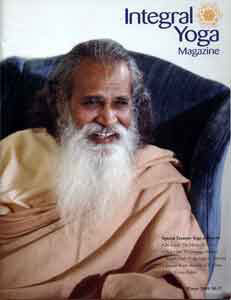
Integral Yoga Institute Magazine

An Interview with Rabbi Andrew Hahn, PhD

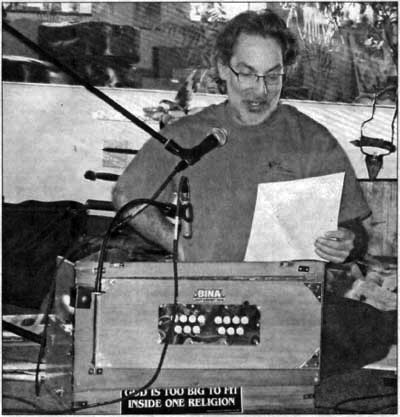
Rabbi Andrew Hahn (Reb Drew) maintained an interest in music throughout his years of academic and rabbinic study and ultimately began to attend Sanskrit kirtans led by Krishna Das, Wah!, Deval Premal and Miten, among others. Reb Drew learned to play harmonium. It seemed only natural to Reb Drew, as someone who had danced in synagogues and pounded more than a few Sabbath tables, that Hebrew would function wonderfully in a kirtan framework. Utilizing Indian instruments and chant melodies in a call-and-response kirtan style, Hebrew Kirtan and the Kirtan Rabbi were born.
Integral Yoga Magazine (IYM): How did you become the “Kirtan Rabbi”?

Reb Drew (RD): I had done some Yoga and had taught martial arts for more than 30 years. I had a PhD in Jewish philosophy and was a Reform rabbi. I was trying to find work, but I couldn’t find a regular job. I was clearly somehow “outside the box.” I went to Boulder, Colorado and came under the influence of Rabbi Zalman Schachter-Shalomi. There was an “east-west” connection with Reb Zalman. He had spent time with the Dalai Lama and was featured in the book, The Jew in the Lotus. I am told that he and Swami Satchidananda were close. A lot of my friends were listening to Krishna Das, but I was skeptical at first. In Boulder, alone in an apartment, I began listening to Krishna Das CDs and found I enjoyed them. I thought to myself, “This could work well in Hebrew.” I didn’t know anyone doing Hebrew kirtan, so I went back to New York City and, without ever having seen one, ordered a harmonium. Meanwhile, Omega had its first ecstatic chant weekend, so I heard my first live kirtan there. Then, when my harmonium came, I sat down and immediately knew “This is where I belong.” More importantly, I realized I could teach Torah through this.

IYM: Did you have a theory behind your approach to Hebrew kirtan?

RD: I didn’t have one. In retrospect, despite all efforts to get a regular job, I discovered God wanted me to do something different. I couldn’t fit as a pulpit rabbi or regular academic. So, leading Hebrew kirtan became the perfect  seva (selfless service) which allowed me to mobilize all my skills. Rabbi Shlomo Carlebach and Debbie Friedman revolutionized Jewish music in the 1960s and ‘70s when, rather than just having passive congregants listen to great cantors, they got everyone singing. With Hebrew kirtan, I feel like we are bringing everything that came before and taking it to another level. Not too long ago, I heard my buddy David Newman (Durga Das) comment at IYI in NY that we’re in a kind of “age of kirtan,” that this practice is desperately needed at this time. I had caught the wave myself and realized that I was bringing kirtan to other places, other audiences. I am deeply influenced by the relational philosophy of Martin Buber, I should add.

IYM: What is the relationship between traditional kirtan and Hebrew chanting?

RD: I wanted to reach into the Jewish world and enliven it with the kind of passion and pathos we get when we go to a Jai Uttal kirtan. I love Hebrew, which is recognized as a vibrational language, like Sanskrit. I chant Sanskrit all the time for myself. But as a rabbi, I chant in Hebrew, a language just yearning to be sung. When we chant in Hebrew, we choose beautiful verses and move the energy through the  sephirot (aspects) of God. This is all cross-fertilization for me. I’m involved in the Yoga world and I bring Jewish stories and wisdom into Yoga studios. I also bring bhakti Yoga and Tai Chi to the Jewish world.

I believe that religion and spirituality are not necessarily the same. Our spirituality is a more individual experience. By myself on a desert island, I might not pray in a Jewish form; I’d probably practice Taoism, to be honest. But I don’t live in a vacuum. I have family and a tradition. In the world, I place myself in community as a Jew. Thankfully, we live in a time where I can be a Jew who loves Yoga and Tai Chi! My friend Rabbi David Ingber recently conveyed a wonderful image from Swami Ramananda, president of the IYI in New York: You have a deck of cards. The back of the deck is all the same, but when you turn it over there are many different faces. That’s what God is like. So, we’re bringing just such a multi-faceted spirituality through kirtan to Judaism. By the way, there are many names for God in Judaism — and we sing them all, male and female!

IYM: It could sound like you are saying that Judaism doesn’t have spiritual energy.

RD: Judaism has traditionally had incredible spiritual energy. But I think, in some quarters, we’ve lost the passion of the heart. I don’t want to ignore our traumatic history or forget it. We have too often been pushed into in a reptilian fear response, which is sadly understandable. I’m not trying to change Judaism or our weekly services. But, I am trying to nudge Judaism. The opposite of love is not hate; it’s fear. Part of my mission is to say, “Sure, let’s advocate for ourselves. Let’s distinguish ourselves. But let’s not do it out of fear-driven self-entitlement. Let’s focus on Judaism as a religion of love, a religion that is God-filled, positive and joyous — and bring that to the world.”

IYM: For those unfamiliar with either Sanskrit or Hebrew, how important is it to understand what one is chanting?

RD: Krishna Das famously remarks that, when we chant, the words don’t matter. I agree, and I always say that it’s the vibrational tone and intention of the heart that is all-important. But, for the  kirtan wallah, the person leading the kirtan, the knowledge of the words really matters. As the “kirtan rabbi,” the rabbi side of me is more heavily weighted than the kirtan side. The Hebrew phrases I chant are precisely chosen. It matters deeply that I know the etymology of the words, how they are used in the Hebrew Bible and how they have developed within rabbinic Judaism as well as in Kabbalah.

A concrete example. Shoshana Jedwab, my percussionist, largely taught herself percussion. She’s not a trained musician; she’s a “primal drummer,” you could say. I could get a tabla player who has been trained in India. But Shoshana has been a Jewish educator for 20 years, and she deeply knows the Hebrew language. It matters to me that the percussionist knows the intention and meaning of what we are chanting, even if she doesn’t “sing.”

For those participating, it’s quite the opposite. While we distribute papers with the transliterated words and translations, the words matter less than the intention (kavannah) we set and the resulting connection with the Divine. I like to say: “We don’t sing too many words, but we sing ‘em a lot!”

IYM: Are your kirtans very planned out and what role does the audience play in them?

RD: It’s crucial to me that the kirtan is mostly improvised. I lay down a basic chant, and then the audience determines where it goes. As a rabbi, I have tried to cultivate the attitude of a “disappearing point.” I do not matter. For example, I sometimes “want” to bring a chant to a close and I cannot. Despite my desire, it may take 10 minutes to end, because the participants are not ready for it to end. I’m merely what, in Hebrew we call a shaliach tzibbur, an emissary of the public. So, my practice is to divest myself of any ego and will of my own. It’s an honor to facilitate the kirtan but, in essence, the kahal, the community, is leading it. (Of course, I like to think something channels through my voice, too.)

When leading kirtans, I often make a joke about this after the first chant. I’ll say, “Now it’s time to introduce the performers….” And, of course, the people always think I’m about to introduce the band. But, then I continue, “…but there’s just too many of you out there.” Sometimes a professional singer approaches me and says, “If you need a backup singer, I have a strong voice.” I always think to myself, ”Well, that’s a strike against you!” I don’t want strong singers; I like people with sweet voices who are shy. We invite the audience to participate; we don’t want to be performing. Krishna Das has just such an inviting voice. If he were an opera singer, people would think they should just sit back and listen. I always tell my musicians, “If at any point you have to stop singing or playing to increase their participation, then do it.” And that goes for me, too, of course.

IYM: What are your hopes for Hebrew kirtan?

RD: In Judaism, we speak of  ha-Olam Ha-ba (the World to Come). Through meditation, we know that this world is accessible to us now. God is like the radio tower that is beaming access to the divine. We have to tune ourselves in to receive it. The goal of kirtan is to gain ec-stasis, which means, “stepping out,” leaving the material status quo. If I had to sum up the essential goal of Hebrew kirtan, it is to have Ha-Olam Ha-ba right now. Then we fold it back into this world in order to strengthen our mission of tikkun olam (repairing of the world). I mean, I finally want to emphasize that Judaism always has been and remains about taking care of the poor, orphans, widows and disenfranchised among us. Kirtan gives us the staying power.

Reb Drew began college as a classical guitarist at the music conservatory at Carnegie-Mellon University and later received a PhD in Jewish philosophy from the Jewish Theological Seminary of America. He was ordained as a rabbi at the Hebrew Union College and now travels the country teaching workshops and offering Hebrew kirtan. He is Resident Scholar at CLAL: the Jewish Center for Learning and Leadership. His new CD, “Kirtan Rabbi: Live!” is available from: www.KirtanRabbi.com. Reb Drew leads monthly Hebrew kirtan at the New York IYI.

Lancaster Intellegencer

Seeking spirituality

N.Y. rabbi will initiate Asian Indian-style chanting to Jews and non-Jews here

BY LOR VAN INGEN,  Intelligencer Journal Staff
May 6, 2006 – Lancaster, PA

Kirtan Rabbi photo in the Lancaster IntelligencerJewish mystic traditions that have been repressed for hundreds of years are now being reborn as Jews seek more spirituality in their lives.

Rabbi Andrew Hahn of Manhattan, N.Y., will introduce Lancaster to an Asian Indian-style Hebrew mystical chant, called a kirtan, at 7:30 tonight at Congregation Degel Israel (sic!), Duke Street.

“Many Jews these days are not finding in regular Jewish worship services the kind of spirituality they are seeking,” Hahn said in a telephone interview this week.

“So many are turning to Hinduism or Buddhism to find something that is lacking in normative Jewish practice. This is called the Hin-Jew phenomenon or the Bu-Jew phenomenon,” said Hahn who has a doctorate in Jewish philosophy.

Hahn also has no problem with seeking spirituality in other traditions, he said, because “Judaism has had a lot of lost or repressed traditions, especially after the Enlightenment with its [emphasis on] rationality. Something has been missing. I’m trying to help fill that gap. I’m drawing on resources of Jewish traditions to re-excite Jews and non-Jews to chant in Hebrew.”

The kirtan is an Indian-style music form of chant with a call and response – “I sing a line. You sing a line,” he said. “the idea is to do it again and again to get momentum going. Maybe 10 to 15 minutes, building up a kind of excitement in speed, pitch and energy.”

Although the kirtan is usually chanted in Sanskrit, Hahn said, he uses the Hebrew language. The kirtan also is not just for Jews who can read Hebrew because the language is transliterated in short snippets of text, he said.

Hahn also practices the Hebrew kirtan a little differently than others. While others chant Hebrew words to Indian music, Hahn uses both Hebrew words and Hebrew/Jewish/Hassidic melodies – native Jewish notes, Hahn said.

The chants are sung to music that Hahn plays on a harmonium, an instrument that functions as a reed organ with a double bellows system.

“Most of the music a Jewish audience knows, but I’ve [transformed] it into different modes that sound eerie,” Hahn said.

Besides the chanting, Hahn adds teachings, a lesson or a moral story.

Hahn reiterates that the kirtan is not entertainment, but meditation. “You don’t have to be great singers, but I request that you come ready to participate. Join the group. Let go of inhibitions and express yourselves,” Hahn said.

Ken Firestone, director of education at Congregation Shaarai Shomayim, said he attended a kabalistic kirtan Philadelphia. “The whole ambience is so enriching. And the vocalization, even if you don’t know Hebrew, the synergy flows together,” Firestone said.

The Jewish people have a “lot to learn from [Eastern meditation practices] that we can mix with our own traditions,” Firestone said. “The Jewish tradition of mysticism has been a repressed tradition. It’s now much more popular,” he said.

Interfaith Today

“Every few generations, Judaism  transforms itself. One  such radical change has been  underway now since the  1970s. A powerful force  within the current wave of  revitalization–the ecstatic  movement–counts among  its proponents, an emerging  leader, Rabbi Andrew Hahn,  ‘The Kirtan Rabbi.'”
Read the full article in pdf format.

LA Yoga

“Rabbi Andrew Hahn, known as the Kirtan Rabbi, has been facilitating bhajan (sacred song) over the last several years. His goal is to create a cross-fertilization of song and wisdom by bringing Jewish teachings to the Yoga world even as he presents bhakti (devotion) to the Jewish world.” Read the full article in pdf format.

Baltimore Jewish Times

Kirtan Rabbi’ Brings Indian Chants, Drumming

Maayan Jaffe Staff Reporter

OCTOBER 26, 2007

Kirtan Rabbi
When the lights dim at the Owings Mills Jewish Community Center on Saturday night, Nov. 10, the chanting will begin. The drums will beat. Voices will vibrate.

From 7:30 to 9:30 p.m., the JCC’s Adult Life department presents “Kirtan Rabbi: Mystical Hebrew Chant.” The evening, according to adult life coordinator Miriam Abramovich, “from start to finish is going to be really exciting.”

The “Kirtan Rabbi” is Rabbi Andrew Hahn of New York City. Joined by drum circle facilitator Shoshana Jedwab, the two will unleash the life force through a participatory song session of Hebrew call-and-response chanting. (No knowledge of Hebrew is necessary.)

“People should come with an openness to let go a little, participate and enter into something a little different than usual,” said Rabbi Hahn, who will encourage people to chant, hum and meditate along with him – and wear comfortable clothes.

In synagogues, Jews sing a prayer through and then move on to the next. Kirtan chanting depends on continual repetition of a “simple, beautiful Hebrew phrase to enter a different consciousness and state of mind,” he said. Chants can go on for as little as two minutes or as many as 20, the participants determining each chant’s length.

Before each chant, the rabbi offers what he calls an orientation, a teaching to set the mood and intention for the upcoming chant. Upon completion, there is a short meditation or silence.Folks generally sit on yoga mats or pillows.

Though the system is Eastern in nature, Rabbi Hahn said the intent is not to “be Indian,” or even to bring the two cultures together. He said he wants Jews to find commonality and spirituality in their own religion.

With a rabbinical degree from Hebrew Union College and a doctorate in Jewish thought from the Jewish Theological Seminary, Rabbi Hahn said the “rabbi” part of “Kirtan Rabbi” is equally as important as the “Kirtan.” What he said he is trying to do is use an Indian method in a Jewish way, to reach people who might otherwise feel spiritually empty or at least need something to complement their traditional religious experiences.

“Most of us have grown up with a Judaism that got pretty dry, and that is why so many people went off to be ‘Hin-Jews’ or ‘Bu-Jews.’ They weren’t finding the energy they were seeking in Judaism,” he said.

Rabbi Hahn said spirituality is not enough without religion, and he doesn’t think mixing a cocktail of spiritual practices will offer the same fulfillment as finding spirituality in religion, which offers a history and community.”Religion with no spirituality will die,” he said. “Spirituality without religion is a kind of narcissism.”

At his sessions, he said he hopes people will have “a direct yet intellectually and emotionally informed experience of God, whatever God means to them, and to have that connection to the Divine in a context where they also feel connected to the community of participants around
them.”

Ms. Abramovich said she expects as many as 50 people to attend the “Kirtan Rabbi” event, which costs $8 for JCC members and $12 for non-members (drink and dessert included).

She said the night fits into the center’s spirituality and wellness program, and she said she is confident that “if you are looking for a new way to explore a connection with God and spirituality, or even just interested in Hebrew and niggunim (wordless Chasidic melodies),” the
“Kirtan Rabbi” will be able to help.

“He is really interested in breaking down the formalities of prayer and connecting to God,” said Ms. Abramovich.

What Is Kirtan?

Kirtan is a form of chant developed in India to heighten participation, communal feeling and ecstatic communion with the Divine, according to Rabbi Andrew Hahn. Its unique call-and-response formula takes away the notion of singer and audience, but rather is wholly participatory.